
Travelling with your Bike
There’ll come a time when you’ll probably want to travel to compete in a triathlon event and possibly fit in a post-race holiday. Regardless of where you’re heading, the last thing you need is a bent frame or damaged rear derailleur due to rough baggage handling. Here are a few tips to make sure you
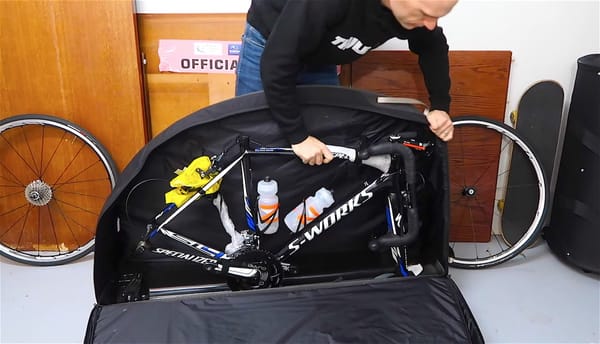
There’ll come a time when you’ll probably want to travel to compete in a triathlon event and possibly fit in a post-race holiday. Regardless of where you’re heading, the last thing you need is a bent frame or damaged rear derailleur due to rough baggage handling. Here are a few tips to make sure your bike also enjoys the journey and arrives safely.
As many triathletes do, you have probably dropped a few grand on your trusty steed, so you want to keep it looking good. This means protecting the paint job or carbon from scratches. After all, you will probably want to upgrade your bike at some stage and maximise its re-sale value. Nothing depreciates a bike like chips and scratches.
To get started, all you need are a few bits and pieces such as pipe insulation and some form of tape. Adhesive bandages are a good option as they secure the piping but also come away from the pipe relatively easily without damage to allow re-use.
Next, remove your water bottles and loosen the rear derailleur from the rear frame stay. Start by cutting the pipe insulation to lengths to cover each section of your frame. Then simply cut down the length of the tubing. You now have a snug-fitting padded tube to slide over your various tubes to protect your frame. Tape (or bandage) them on to secure the fit.
Before you drop the saddle and handlebars, mark their positions. This will allow you to reposition your saddle and bars to the same position upon your arrival. There’s nothing worse than getting to your destination and finding you can’t reproduce the position you’ve been riding in for the last three months. This will,
- detract from your performance and
- increase your chance of injury. To mark the positions you can use some tape or a permanent marking pen.
Some bike boxes won’t have adequate width in them to allow you to leave your pedals on. Take them off and then secure your crank arms at nine and three o’clock. Then place some of your insulation piping around the chain-rings – the teeth are relatively easy to bend and if this happens, you’re in trouble. As for your pedals, simply wrap them up in a rag and secure them in your bike box. Remember, when it comes to putting them back on put a little grease on them and tighten by winding them forward in the direction of the pedal action.
The rear derailleur is probably the most vulnerable component of your bike. I’d be a very rich man indeed if I had a dollar for every travelling triathlete that arrived in some far off exotic place only to find their rear derailleur had either been bent out of shape or snapped off their frame completely. So, your best bet is to remove it, you can leave it connected to the chain, wrap it up in a rag and tape it against your rear stays. When you arrive, it is simply a matter of unwrapping it and re-securing it to the frame. Remember, this is a relatively delicate, finely engineered and tuned piece of machinery. Once it’s reconnected, take it for a test ride as it might require some minor adjustment to ensure smooth running.
Do you go for the hard bike box or soft bag? Both have their pros and cons. Hard boxes are probably a little more secure but more cumbersome to transport. Soft bags don’t offer as much protection but are a little easier to move around. If you’re only travelling intermittently to race I’d be tempted to go for a hard box, however if you’re on and off planes regularly a good quality soft bag will probably be easier to travel with. Either way, use some of the tips contained within this article and it’ll make your travel a little less complicated and frustrating.
Written by
Read next
2009 Ironman, Busselton, WA – One of Australia’s Great Triathlons
Last weekend saw the running of IRONMAN WA, in sunny Busselton, Western Australia. In addition to the Elites 1,309 individuals lined up for the sixth edition of IRONMAN WA. Having made this trek early in May of this year for the Half Ironman and having fallen in love with the surrounding areas of Margaret River, Dunsborough, Bunburry and of course Busselton itself, due to its flat open stunning landscape and prestine waters, and of course the lack of Matthew Flinder Drive type hills, I thoughtIronman 70.3 Geelong: My Insider's Guide to Conquering the Course
Master the Ironman 70.3 Geelong course through a local's eyes before the world's best pros descend on Victoria for the 2025 Pro Series opener.
How to Get Tri Famous - Your 15 Seconds of Fame
Want to make the Ironman highlight reel? From epic finish-line dances to last-minute heroics, here are five sure-fire ways to get yourself featured in the official race coverage.
New Year, New Goals: How to Make Your Resolutions Stick in 2025
Stay on track with your 2025 resolutions by planning smart, breaking goals down, teaming up, and celebrating progress—because success is built on consistency, not perfection.
Ironman Western Australia: Flat, Fast and Fierce in Busselton
From a scenic jetty swim to a wind-whipped bike and run, Ironman WA offers an iconic year-end test and a final shot at points on Australia’s west coast.
Noosa Triathlon: 5 Must-Do Experiences for the Ultimate Weekend
From soaking up Hastings Street energy to bargain-hunting at the Expo, these must-dos make your Noosa Triathlon weekend unforgettable.
10 Things You Must Know Before Stepping Off the Plane in Hawaii
From scorching heat to quirky island slang, these insider tips keep you sane, amused and ready for Kona’s triathlon madness.