
Running Injuries – The Big Five Series – Shin Splints
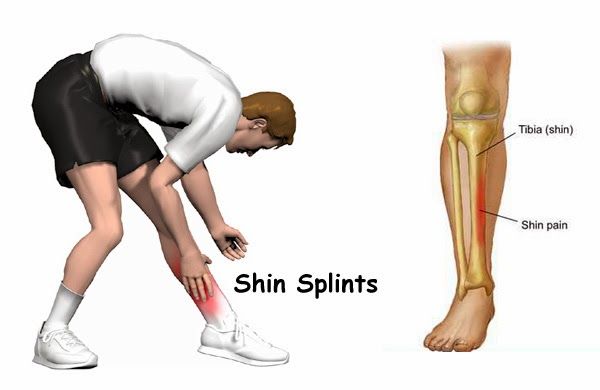
Shin splints Definition: Inflammation of the muscle attachments and interosseous membranes to the tibia (shin bone) on the inside of the front of the lower leg. Note: "shin splints" is a very widely used phrase and can refer to several lower leg injuries. The focus of this description i

– 2 min read
Definition
Inflammation of the muscle attachments and interosseous membranes to the tibia (shin bone) on the inside of the front of the lower leg. Note: “shin splints” is a very widely used phrase and can refer to several lower leg injuries. The focus of this description is specifically on the inflammation described above.
Symptoms
- Pain or tenderness along the inside of the shin, usually about halfway down the shin. Pain and tenderness may extend to the knee
- Pain on palpation of the shin
- Pain is most severe at the start of a run, but may disappear during a run, as the muscles loosen up. This is different to a stress fracture, where there is pain during weight bearing activities (walking, stair-climbing)
Causes
- Inflexible calf muscles and tight
- Achilles tendons – place more stress on to the muscle attachments
- Overpronation (feet rotate too far inward on impact) excessive running on hard surfaces, such as concrete pavements
- Incorrect or worn shoes
- Overtraining, or a rapid increase in training load or intensity
- Beginner runners are more susceptible to this problem for a variety of reasons, but most commonly due to the fact that the leg muscles have not been stressed in such a way before they started running.
Shin Splint – Treatment Methods
Self-treatment
- Stop running, especially in the case of severe pain, if pain is mild, then reduce training load and intensity, and avoid downhill running and running on cambered surfaces
- Take a course (5 – 7 days) of non-steroidal anti-inflammatory drugs(ibuprofen/voltaren/cataflam/mobic) available from your general practitioner or pharmacist
- Apply ice to the shin area – for 10 minutes every 2 hours, in order to reduce the inflammation
- Self-massage, using arnica oil or an anti-inflammatory gel, to the muscle only (along the inside of the shin).
- Stretching of the gastrocnemius and soleus muscles. Hold for 30 secs. Relax slowly. Repeat to opposite side. Repeat stretch 2 – 3 times per day.
- Remember to stretch well before running
- Return to running gradually
- Full recovery is usually between two to four weeks
Medical treatment
- Physiotherapy, if injury doesn’t respond to self-treatment in 2 to 3 weeks
- Orthotist or podiatrist for custom-made orthotics to control overpronation
- Orthopaedic surgeon – if injury does not respond to physiotherapy treatment, a bone scan, diagnostic ultrasound or X-ray may be necessary to check for a stress fracture.
Alternative exercises
- swimming, pool running, cycling (in low gear) “spinning”
- avoid any weight-bearing exercises
Preventative measures
- Stretching of the gastrocnemius and soleus muscles. Hold each stretch for 30 seconds, relax slowly.
- Repeat stretches 2 – 3 times per day. Remember to stretch well before running.
Strengthening of foot and calf muscles
- Place a weight around the foot, and move your foot up and down from the ankle, with no movement in the rest of the leg. Or use a partner to grasp the foot and provide manual resistance.
- Band exercises. Anchor one end of an exercise band (e.g; inner tubing of bicycle) to a heavy object, such as the leg of a couch. Loop the other end around the foot. Move the foot up, down, and from side to side against the band’s resistance to exercise different muscle groups.
- Correct shoes, specifically motion-control shoes and orthotics to correct overpronation
- Always apply ice after running
- Run on soft surfaces
- Avoid overstriding, which places more stress onto the shins
- Gradual progression of training programme
- Incorporate rest into training programme
Share this article
Share
Written by
Karl Hayes
Karl is a Gold Coast based father of 3, a keen home improver and an age group triathlete who races on the M5 Acadamies triathlon team. ‘A good life balance is incredibly important’.
Read next
Wetsuit – Factors related to the advantageous effects of wearing a wetsuit during swimming
Factors related to the advantageous effects of wearing a wetsuit during swimming at different submaximal velocity in triathletes. This study was designed to compare the effects of wetsuit (WS) to swimsuit (SS) at identical relative velocities in a swimming flume.Ironman Western Australia: Flat, Fast and Fierce in Busselton
From a scenic jetty swim to a wind-whipped bike and run, Ironman WA offers an iconic year-end test and a final shot at points on Australia’s west coast.
Noosa Triathlon: 5 Must-Do Experiences for the Ultimate Weekend
From soaking up Hastings Street energy to bargain-hunting at the Expo, these must-dos make your Noosa Triathlon weekend unforgettable.
10 Things You Must Know Before Stepping Off the Plane in Hawaii
From scorching heat to quirky island slang, these insider tips keep you sane, amused and ready for Kona’s triathlon madness.