
How to Tackle Hills on a Triathlon Bike (TT)
Climbing on a bike can intimidate new triathletes, but with the right strategies in gear choice, posture, and energy management, one can conquer hills efficiently and minimise fatigue.
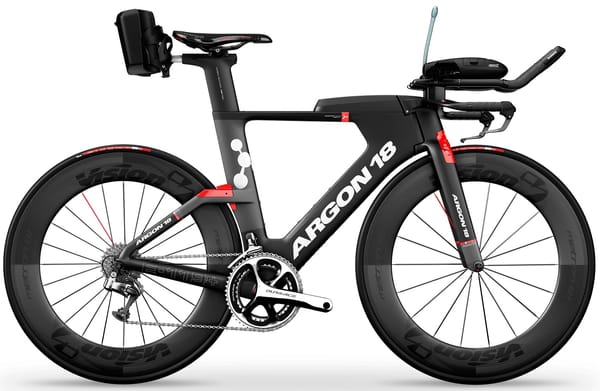
For many newbie triathletes, climbing can represent one of the greatest challenges when it comes to riding. Once that road in front of you starts to rise, it can be a struggle to maintain rhythm and remain comfortable. Apart from clocking up serious hours riding on mountainous roads (which of course is great for building bike strength), I’ve put together a few pointers that should make you faster and more efficient when riding up hills. When climbing, it is important to be smart about the amount of energy you expend and to choose the best position on the bike relative to your terrain.
There are three climbing positions that you can adopt on the bike. Each position comes with its own pros and cons, so it is important to understand when to adopt which position and why.
Aero bars
If it’s a short climb or it has a shallow incline, it’ll likely pay to stay on the aero bars for as long as possible. While racing, a general rule is that the more time you can stay in the aero position, the faster you will be over the duration of the ride.
Managing exertion
Keeping your power output on the bike as stable as possible is usually the best way to approach the bike leg. Big spikes in power, caused when climbing or pedalling out of tight corners, is the easiest way to increase leg fatigue. When climbing during races, you should only increase your power output by at most 10 percent compared to riding on the flat. Using a power meter on your bike is by far the best way to monitor how much power you’re putting out during any stage of a race. It’ll help you keep your effort at a steady rate. Alternately, a heart rate monitor is another great tool that’ll help you keep your effort as even as possible – particularly when climbing.
Seated climbing
As the road starts to get steeper, the aero benefits of remaining in an aero position become negligible. It’s time to sit up and put the power down. Climbing while seated should be adopted when the climb you face is such that you feel you need to break from the aero position – but not so steep that you feel you need to get out of the saddle. Staying seated while climbing will also help keep your heart rate lower than when standing. This means you’ll be using less energy.
Cadence
For most triathletes, a cadence of between 80-to-95 RPM is ideal for racing. Once you hit a climb, try to keep your cadence roughly the same as you employ on the flat. Cadence is similar to power output in that you should aim to keep it as consistent as possible. If you are standing to climb and are pushing hard with a low cadence, the level of muscular fatigue will increase. Alternately, climbing while out of the saddle with a cadence of 110 RPM or more will see your heart rate skyrocket.
Gearing
When I am setting up my bike for a major race, I always take a good look at the course profile a few weeks out from the event. I make sure my bike is rocking a rear cassette that I know will give me a good range of gearing options for that particular course profile. For example, if it’s a hilly course that’ll require a lot of climbing, I fit a rear cluster of 11/25 to ensure that I have the gears I need to maintain a good cadence through the climbs.
Standing – out of the saddle
When racing, it’s important to remain as aerodynamic as possible. However, on steeper climbs you will find that you are not able to generate the power needed down on the aero bars. Standing up on the pedals will give you more power as you’re using your body weight to put power into the cranks. This comes at a cost, though. Standing while you pedal will lead to increased heart rate as you’re employing more of your upper body to generate power. Climbing out of the saddle should be saved for mountain goat terrain.
Written by
Read next
XTERRA Oak Mountain lures all-star field to Shelby County, Alabama
The XTERRA Pan America Pro Series takes shape this weekend at Oak Mountain State Park in Shelby County, Alabama as America’s best elites host all-stars from Canada, Costa Rica, Mexico, Colombia, New Zealand and Scotland. The 13th annual XTERRA Oak Mountain off-road tri is race number six of 12 in thOptimising Recovery for Triathletes
Effective endurance training hinges on balancing stress with proper recovery to avoid fatigue and optimise performance.
Is Carbo-Loading As Straightforward As We Think?
Master glycogen replenishment without excess carbs, balancing fat utilisation and performance for optimal endurance results.
The Paralysis of Analysis: When Overthinking Derails Performance
Over-obsessing on data, gear, and rigid plans paralyses progress; focusing on simple habits, flexible training, and feeling your effort unlocks real gains.
Ironman Western Australia: Flat, Fast and Fierce in Busselton
From a scenic jetty swim to a wind-whipped bike and run, Ironman WA offers an iconic year-end test and a final shot at points on Australia’s west coast.
Noosa Triathlon: 5 Must-Do Experiences for the Ultimate Weekend
From soaking up Hastings Street energy to bargain-hunting at the Expo, these must-dos make your Noosa Triathlon weekend unforgettable.
10 Things You Must Know Before Stepping Off the Plane in Hawaii
From scorching heat to quirky island slang, these insider tips keep you sane, amused and ready for Kona’s triathlon madness.