
How to Handle Your TT Bike Like a Pro
Think back to the first time you rode a time trial (TT) bike. The differences between a traditional road bike and an aggressive and aerodynamic TT bike are striking. The straight-line speed that a dedicated TT bike gives you makes these types of bikes the number-one choice for triathletes looking to
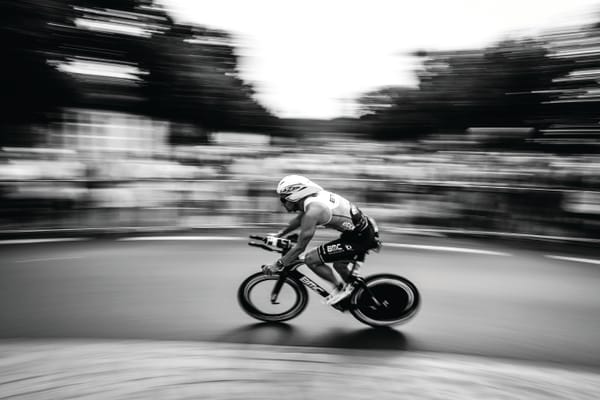
Think back to the first time you rode a time trial (TT) bike. The differences between a traditional road bike and an aggressive and aerodynamic TT bike are striking. The straight-line speed that a dedicated TT bike gives you makes these types of bikes the number-one choice for triathletes looking to go as fast as possible. The TT bike has a lot of advantages; however, handling is not one of them. It’s important to keep this in mind and take the time to get to know how your TT bike handles. Having ridden time trial bikes myself for over eight years, I have refined the two major technical challenges of cornering and descending. Working on these skills will help to make you safer as well as faster. As TT bikes are generally more about aerodynamics than handling, it is important to have a good understanding of how to best manoeuvre your TT bike in technical situations during training so that when you are racing at the limit you are both confident and safe while riding.
Cornering with confidence
As mentioned, cornering on your TT bike takes a fair amount more skill than cornering on a road bike. TT bikes are designed to give riders an aerodynamic advantage rather than providing optimal handling abilities. With this in mind, the key to optimising your speed on a TT bike is to stay in the aero position as long as possible. Therefore, if a corner is shallow enough that you can stay in the aero position, you should take it while staying low and aero. The second you move your hands from the aero-bar extensions, the aerodynamic drag will slow you down. So, on these shallower corners you should attempt to stay in your aerodynamically advantageous position.
On U-turns and sharper corners where you require more control, you’ll need to break from the aero bars and move your hands to the brake levers on your base bar. As you are heading into the corner, raise your inside leg. When you take the corner, your bike will lean over towards the inside point, meaning that if you have your inside leg down you can often come unstuck by your inside pedal scraping against the ground. It is important to visualise your entry and exit point of the corner and try and keep your centre of gravity as low as possible.
Descending like a dove
The importance of good cornering skills steps up a notch when you start to descend. Descending on a TT bike is a skill that, if mastered, will make you faster, more confident and safer. Typically, you will see athletes adopting three different positions while descending riding on their TT bike.
The first position is very similar to the one employed when taking shallow corners; however, it requires you to move farther back on your saddle so as to get as low as possible while keeping your hands on the aero bar extensions. This position works very well when the duration of the descent does not warrant moving into the full tuck position.
The aero tuck is an advanced skill where you attempt to make your body as aerodynamic as possible on long, straight descents to reach the max speed. If you have ever watched coverage of the Noosa Triathlon and seen athletes such as Craig Walton hit speeds of 110 kilometres per hour you will have seen this skill in action. The two variations of this skill require the rider to place their hands either on the ends of the base bars with fingers controlling the brake levers or their hand on the flat section of the base bars, which gives no control of the brake levers.
It goes without saying that cornering and descending (especially at high speeds) while riding can be dangerous and it is important to ride within your skill level. When practising these skills, always ensure that you remain in control while taking corners and descending.
Written by
Read next
The Best Athletes from Across the Globe Head to the Island To Compete at the 2018 Ironman World Championship
Approximately 2,500 of the world’s top athletes will compete in Kailua-Kona, Hawaii on Saturday, October 13 at the most iconic one-day endurance event in the world — the 2018 Ironman World Championship. Ironman will celebrate the history of Ironman and the seminal event that continues to inspire soIronman 70.3 Geelong: My Insider's Guide to Conquering the Course
Master the Ironman 70.3 Geelong course through a local's eyes before the world's best pros descend on Victoria for the 2025 Pro Series opener.
How to Get Tri Famous - Your 15 Seconds of Fame
Want to make the Ironman highlight reel? From epic finish-line dances to last-minute heroics, here are five sure-fire ways to get yourself featured in the official race coverage.
New Year, New Goals: How to Make Your Resolutions Stick in 2025
Stay on track with your 2025 resolutions by planning smart, breaking goals down, teaming up, and celebrating progress—because success is built on consistency, not perfection.
Ironman Western Australia: Flat, Fast and Fierce in Busselton
From a scenic jetty swim to a wind-whipped bike and run, Ironman WA offers an iconic year-end test and a final shot at points on Australia’s west coast.
Noosa Triathlon: 5 Must-Do Experiences for the Ultimate Weekend
From soaking up Hastings Street energy to bargain-hunting at the Expo, these must-dos make your Noosa Triathlon weekend unforgettable.
10 Things You Must Know Before Stepping Off the Plane in Hawaii
From scorching heat to quirky island slang, these insider tips keep you sane, amused and ready for Kona’s triathlon madness.